How can we help?


The Engagement 4Cast

In software development, there’s a debugging technique called rubber duck debugging: before interrupting a colleague, you explain your problem out loud to a literal rubber duck sitting on your desk. More often than not, saying the problem out loud is enough to solve it yourself, and the colleague never gets pulled away from what they were doing. At Bridge 2026, we handed the room rubber ducks for exactly that reason. It’s not really about debugging code. It’s about respecting other people’s time before you assume you need it.
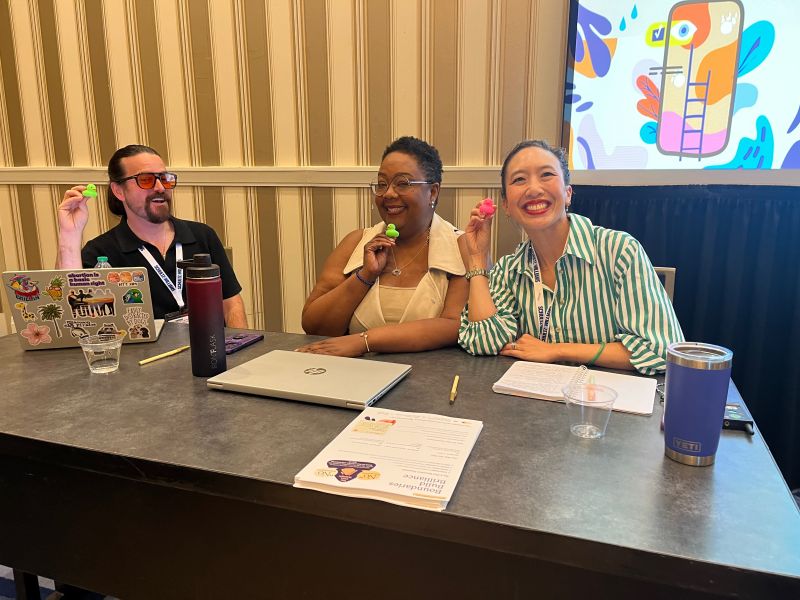
That idea anchored the session I got to co-present, Boundaries Build Brilliance: The Power of ‘No’, with Jade Nguyen Swanson of The Engage Group (PMG) and Joanne Wilson of Humane World for Animals. Before slides, we asked the room three questions: “Who’s answered an email during PTO?”, “Who’s taken on work outside their role?”, and “Who’s said ‘yes’ while already at capacity?” Nearly every hand went up for all three. That’s not a personal failing, it’s a pattern, and it’s worth naming.
Generosity is why most of us work in this sector. The problem shows up when that generosity has no edges, no limits, and no plan behind it. Boundaries aren’t barriers to mission impact. They’re what makes sustainable impact possible in the first place.
A few things stack up to make “No” feel riskier here than in other industries:
Underneath all three is the same trade-off: if everything is a priority, nothing actually is. That’s how burnout starts, not with one bad week, but with a slow erosion of what “priority” even means.
As an employee of an agency who is watching this pattern across a lot of our clients, I have come to the conclusion that it’s worth separating two things that tend to get blended together:
The fix for scope creep isn’t a hard “No” after the fact, it’s flagging the drift the moment you notice it. “Just flagging that this wasn’t part of what we originally scoped” costs a lot less than the conversation you’d otherwise have three weeks later.
I built a small tracker on my laptop to count how many times I context-switch in a day. By 1:38 PM on the first day of the conference, I’d switched contexts 1,063 times. AI queries that take ten or fifteen minutes to run don’t mean you get that time back; they mean you fill it by starting something else, then jumping back, then starting a third thing. AI is a genuine force multiplier for the work we do. It is not a substitute for deciding what actually deserves your attention.
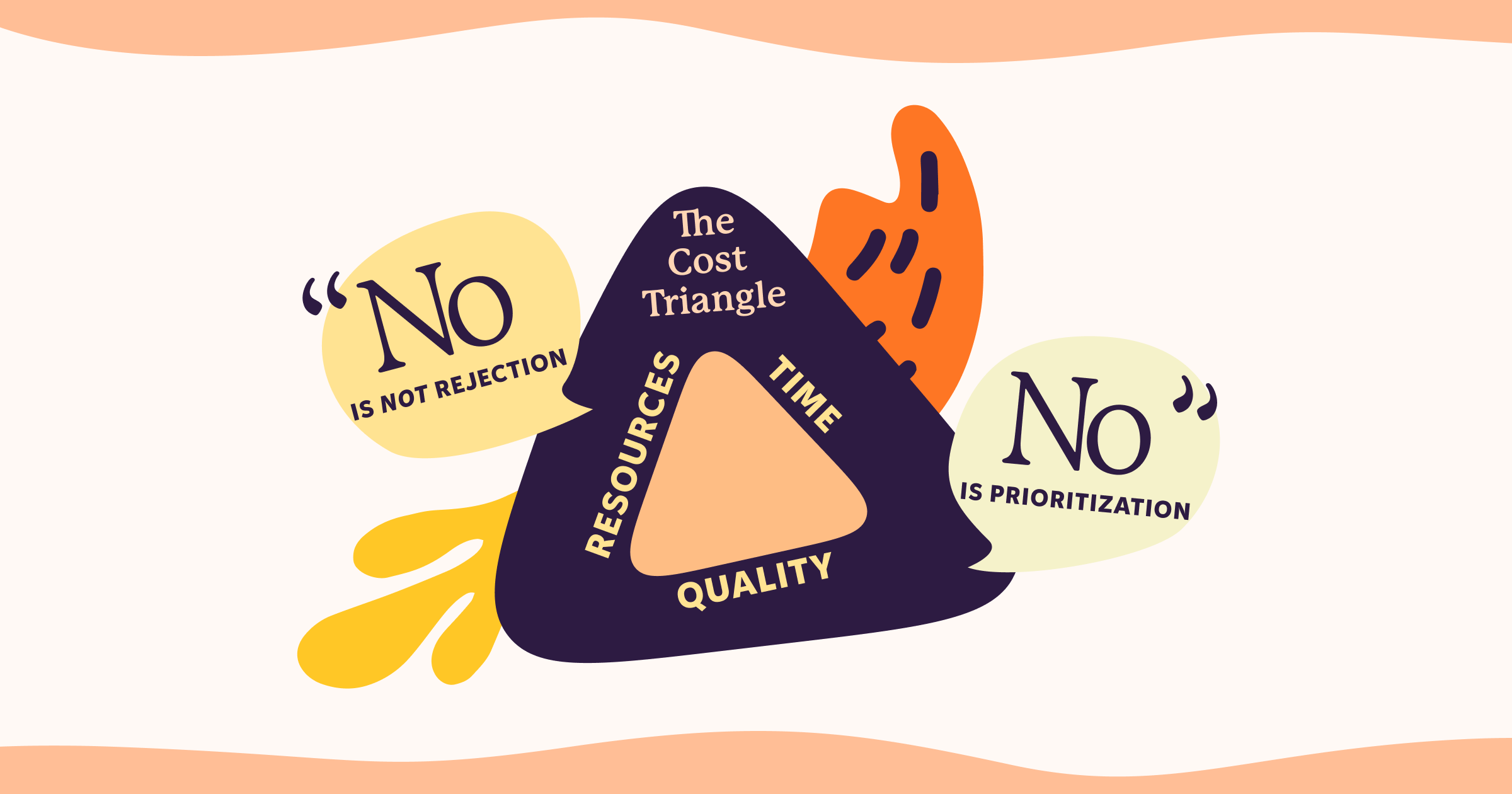
If “No” is a prioritization instead of a rejection, a good “No” should do five specific things:
Notice what’s missing from that list? Nothing on it is about protecting you. That’s what makes it a leadership skill instead of a self-preservation tactic.
In practice, this is a four-part response, in this order:
The order matters. Skip straight to step two and it lands cold, even though the information is identical. The acknowledgment is what makes the rest of it read as leadership rather than rejection.
A few language swaps that do a lot of work:
Delegation is part of this too. When one person becomes the bottleneck for every approval, deadlines slip and the team doesn’t grow, so hand off real ownership, credit people by name when the work goes well, and build succession into the role before you need it.
The rest can be structural instead of personal:
Boundaries aren’t only something you set with a manager or a client, they’re also something worth extending to the people your organization serves. Rainforest Action Network (RAN) put that thinking into practice with their own supporters: rather than asking for more time and attention across the board, they gave people more specific, better-targeted ways to opt in, SMS, regional interests, issue-specific updates, respecting that not every supporter owes the same level of engagement.
See how RAN applied this with their supporters →
The premise holds no matter where you apply it. Whether it’s a colleague, a client, or a supporter on your file, naming a limit clearly tends to build more trust than assuming everyone owes you their full attention by default.
Jade, Joanne and I encouraged the attendees in the room with a follow-up exercise, and it’s worth doing here too: name one thing you’re going to stop saying yes to. Write down what that space would actually let you do better. Then find someone to check in with in thirty days and see how it went.
“No” isn’t the end of a conversation. It’s how you make sure the next yes actually means something.

4Site Studios is a talented troupe of web professionals who are passionate about creating tools to support digital marketers. We love to hear from our community! Reach out to us with your thoughts and questions. And don’t forget to subscribe below to get notified when we post new blogs – no spam, just content👍🏼